
Where it fits
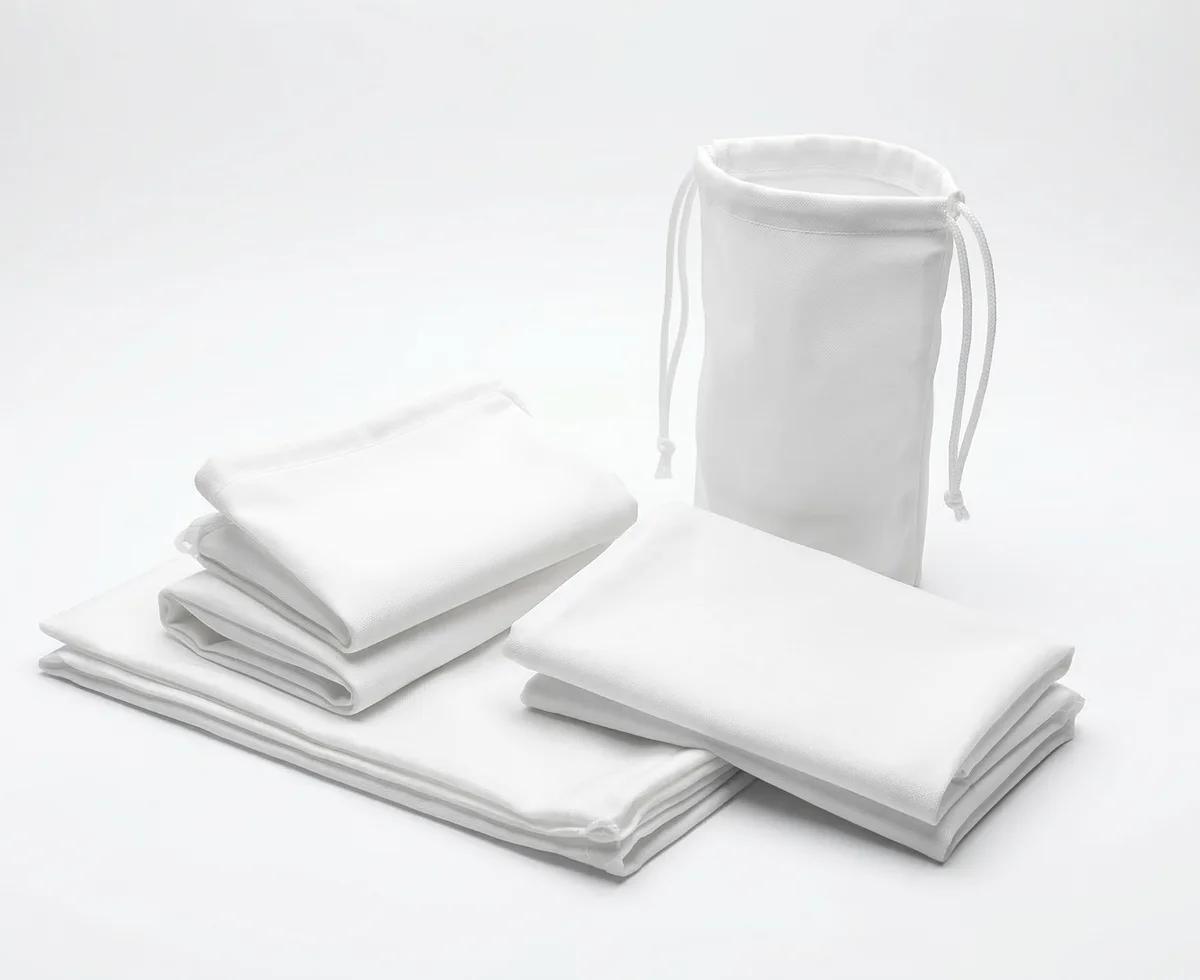
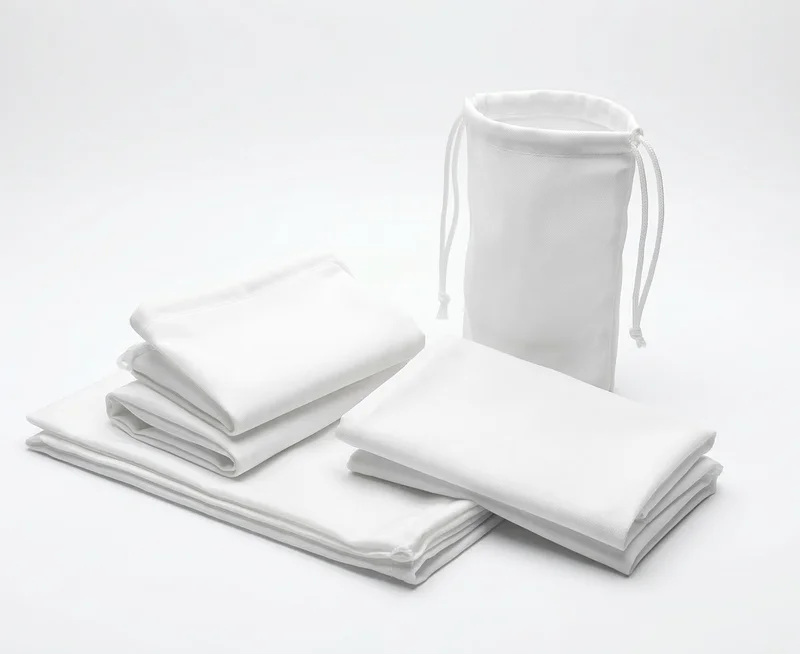
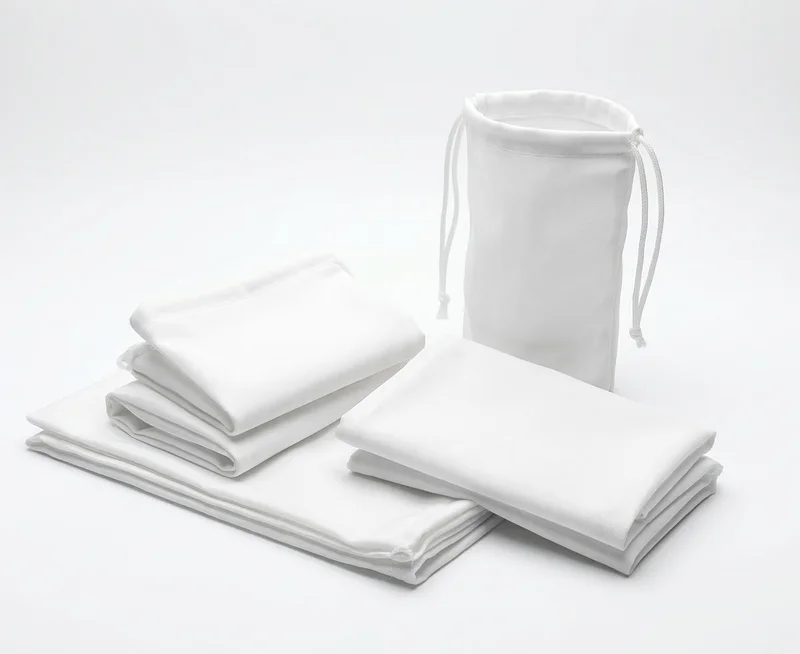
The nylon bag handles viscous fluids and bulk pre-filtration, and sieving duties that need a clean particle-size cut. The difference from felt is one of principle: felt stores particles within its thickness, while monofilament mesh stops them at the surface. This bag sieves rather than absorbs.
Key characteristics
The aperture is set by the weave, so it does not deform under differential pressure and the mesh sheds no fibres — for a process that cannot tolerate shed material downstream, that matters more than the rating number itself. The separation curve is far sharper than a depth medium: everything larger than the weave is stopped, everything smaller passes, and the cut is clean.
The open weave gives very low differential, so the top of the recommended flow range applies at a given size. More importantly it can be back-washed and reused several times, which is its most tangible cost advantage over felt — provided the process permits washing and the labour costs less than a new bag.
Choosing between options
Among the three bags that run in a housing basket:
| Item | High-strength nylon bag (this) | Standard liquid filter bag | High-performance absolute bag |
|---|---|---|---|
| Mechanism | Fixed-aperture monofilament surface filtration | Needle-felt depth | Melt-blown graded-pore depth |
| Rating range | 50 – 400 µm | 0.5 – 1000 µm | 0.2 – 20 µm |
| Differential | Lowest; top of the recommended flow applies | Moderate | Clearly below single-layer felt at the same rating |
| Reusable | Back-washable and reusable several times | Normally single use | Normally single use |
Operation & change-out
Fully sewn with a reinforced bottom seam, it takes the impact load of viscous fluids. Wash or replace once the differential reaches the threshold, and check the mesh for damage and distortion before a washed bag goes back in. The dry temperature limit is generous, but continuous immersion in hot water or humid heat must be derated — nylon loses strength once it takes up moisture.