
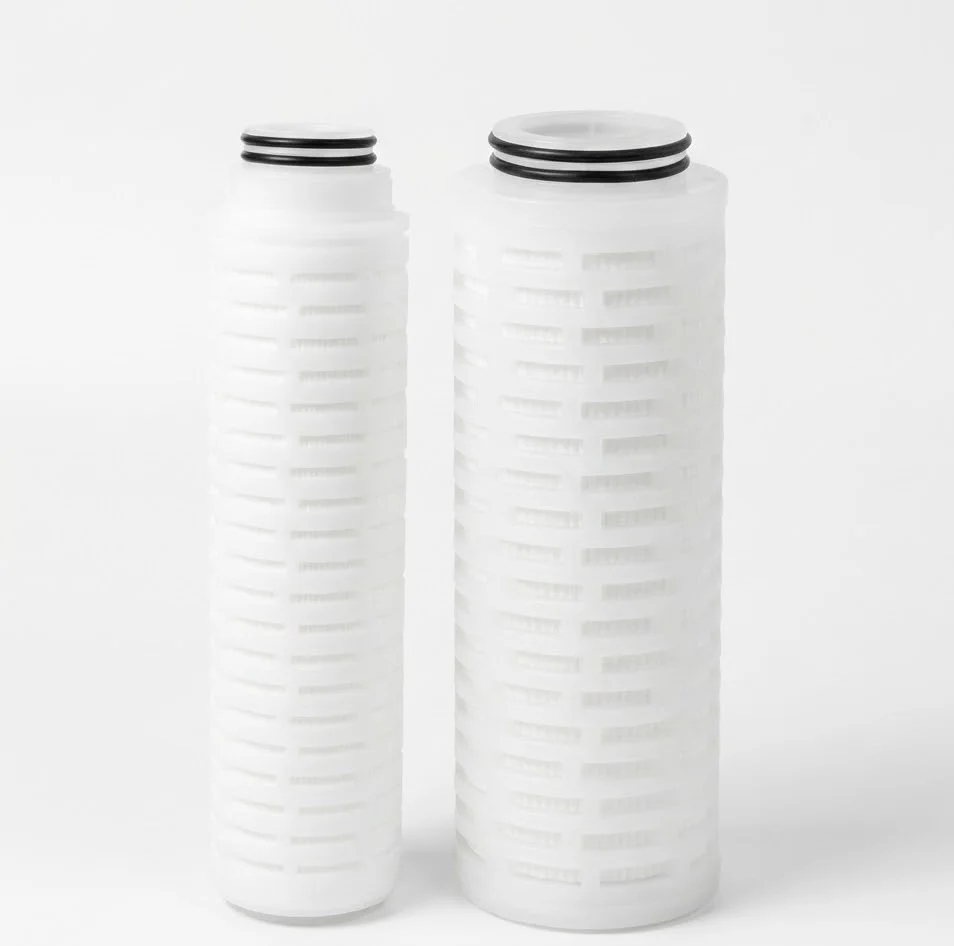
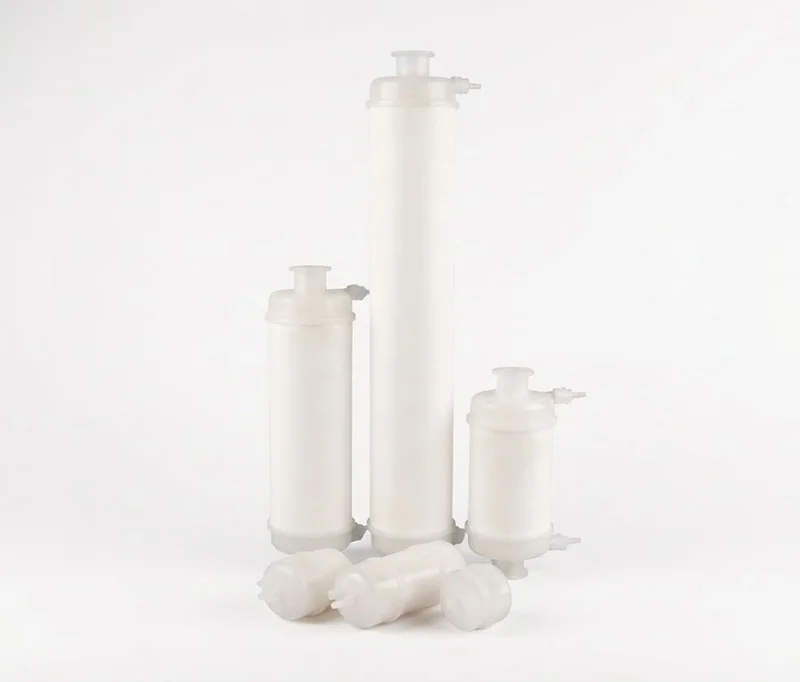
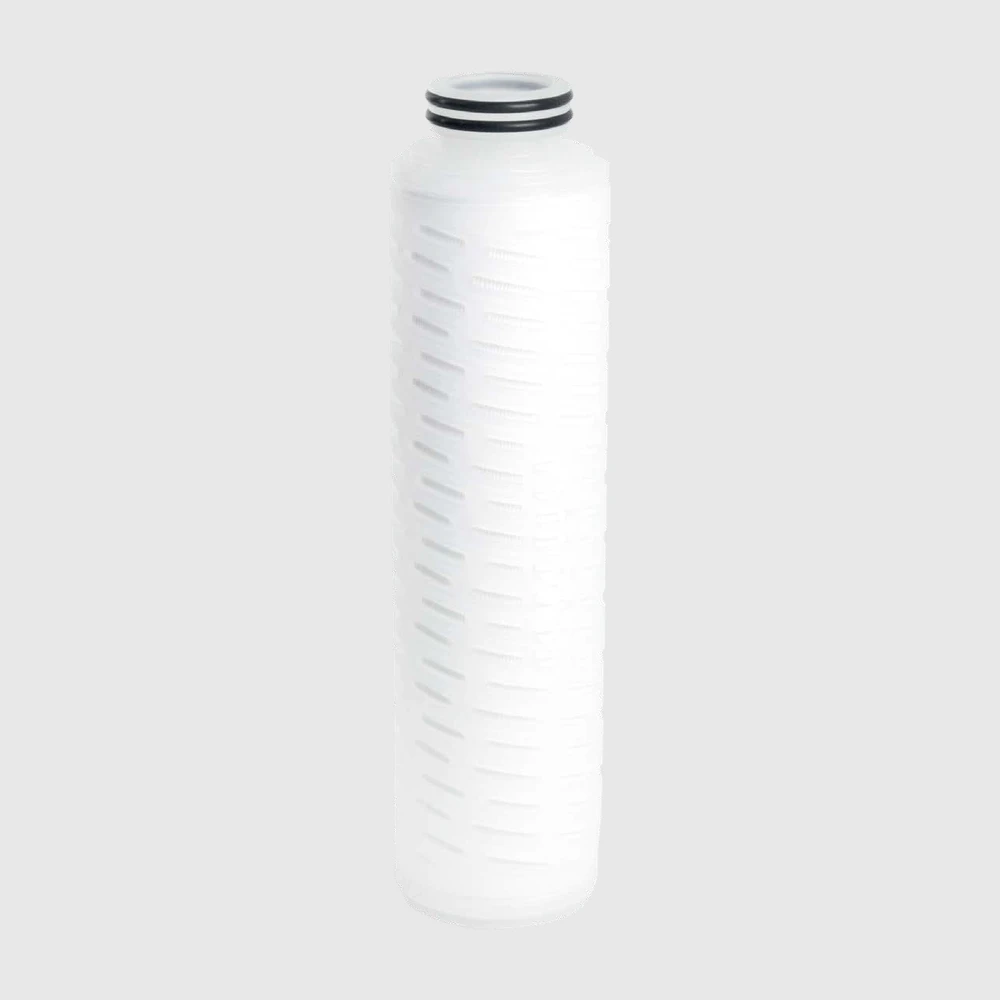
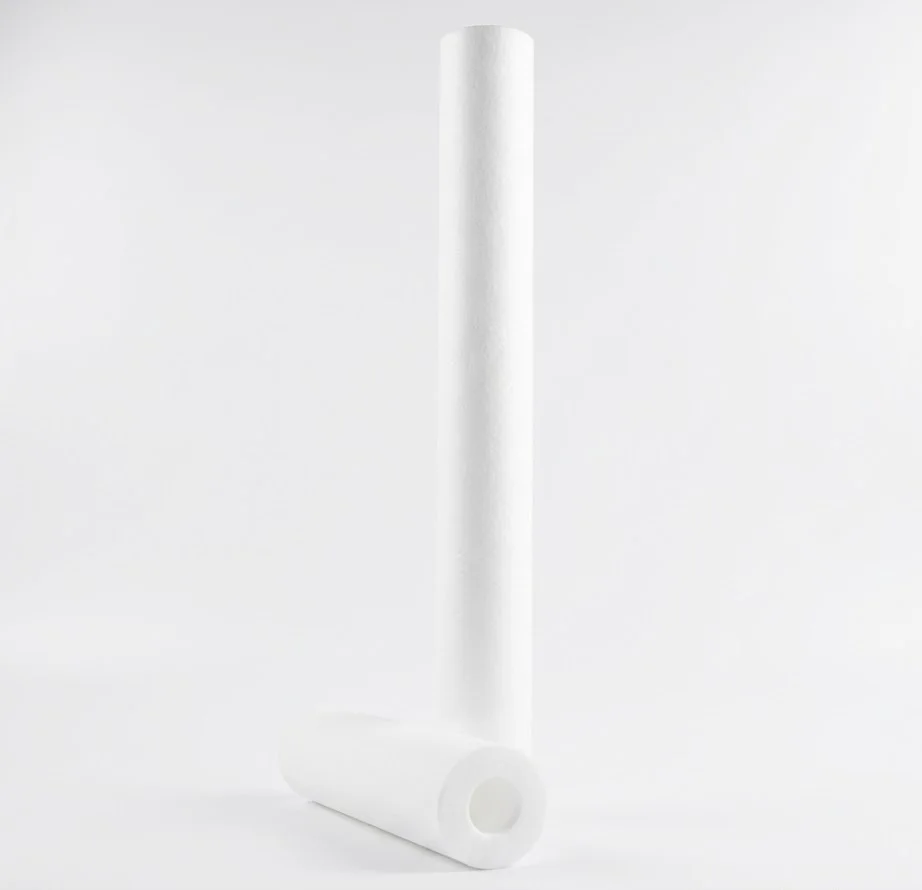
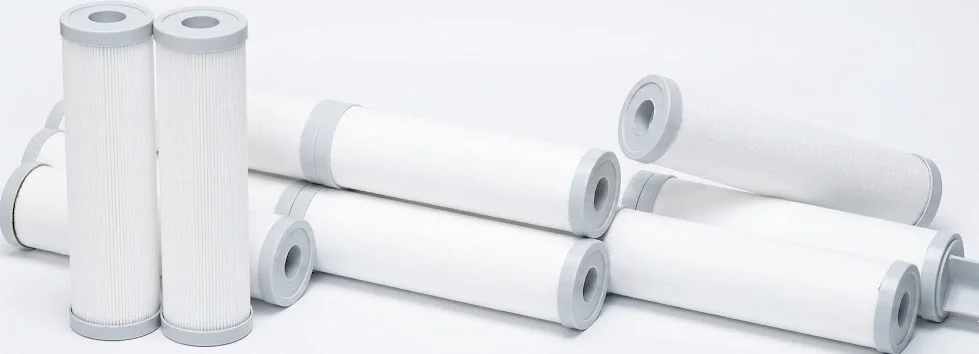
Hollow fiber membrane filters use PVDF or Polysulfone hollow fiber media — each fiber a 0.5–2 mm microtubular membrane — bundled by the thousands into a single cartridge to deliver 5–10 m² of effective filtration area, 2–3× that of an equivalently-sized pleated cartridge. Flow can be configured Inside-Out or Outside-In, with both dead-end and tangential (cross-flow / TFF) operation modes supported.
The core advantages of hollow fiber filters are maximized surface area and ultra-low pressure drop, making them ideal for high-flow, high-turbidity applications requiring frequent backwash. Air-scour-plus-backwash protocols restore flux and extend service life far beyond static depth filters. Hydrophilic treatment ensures instant wetting and prevents air lock.
Typical applications: UPW recirculation filtration, mAb/vaccine TFF tangential-flow purification, biotech cell harvesting, municipal UF water treatment, food & beverage clarification, wastewater reuse pretreatment, and RO membrane protection in seawater desalination.
Frequently Asked Questions
How to choose between hollow fiber and pleated cartridge filters?
Can hollow fiber be used for tangential flow (TFF / Cross-Flow)?
How are hollow fiber membranes cleaned and stored?
Technical Articles in This Category
Understand the principles and how to read the specs before you choose.
Hollow Fiber Membrane Material Selection for Chemical Process Filtration
The five principal hollow fiber membrane materials — PES, PVDF, PTFE, PSU/PESU, and nylon — each occupy a distinct and non-interchangeable chemical service domain. This article applies a four-step selection logic (solvent compatibility first, then pH, temperature, and sterilization mode) to ten representative chemical application scenarios, including photoresist solvents, concentrated KOH/NaOH, dilute HF, biopharmaceutical buffers, and DI water polishing, enabling engineers to narrow material candidates quickly and avoid the systematic failures caused by incorrect membrane specification.
Hollow Fiber Membranes for Precision Chemical Filtration: Advantages and Hard Limits
Hollow fiber membranes offer chemical process engineers more than 10× the filtration area of pleated cartridges in the same housing, low transmembrane pressure, and in-line integrity testing capability. This article examines inside-out versus outside-in flow direction selection, UF (1–100 nm) and MF (0.1–0.45 µm) pore size distinctions, and four hard operational limits: high-solids fiber plugging, swelling-prone solvent incompatibility, backpressure surge fiber rupture, and dead-end concentrate build-up — with a detailed scenario table matching chemical applications to the correct filtration approach.
Polysulfone Family Filters: PPSU vs PSU vs PES Compared
PSU, PPSU, and PES share the same –SO₂– backbone but differ in the linker — yielding very different personalities. This article walks through a 14-spec comparison, common pitfalls, and a cross-comparison with PVDF/Nylon/MCE.
Need a Custom Solution?
Custom sizes, materials or validation protocols — we can build the solution around your process.
Request Customization