Home/Products/Depth Filters/Semi-grade PP CMP POU Filter
Semi-grade PP CMP POU Filter

Semi-grade PP CMP POU Filter

Product ID: semi-grade-pp-cmp-pou-filter|CMP POU

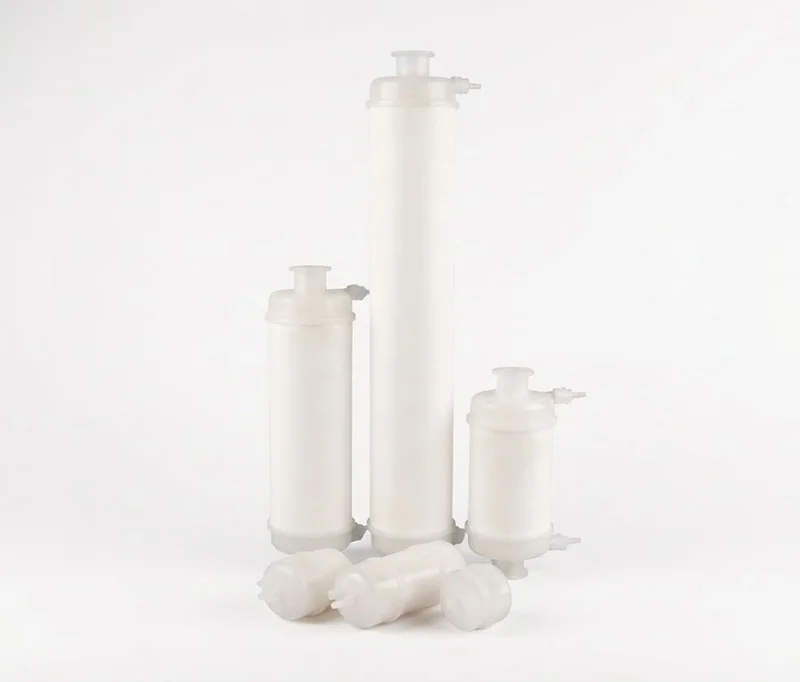
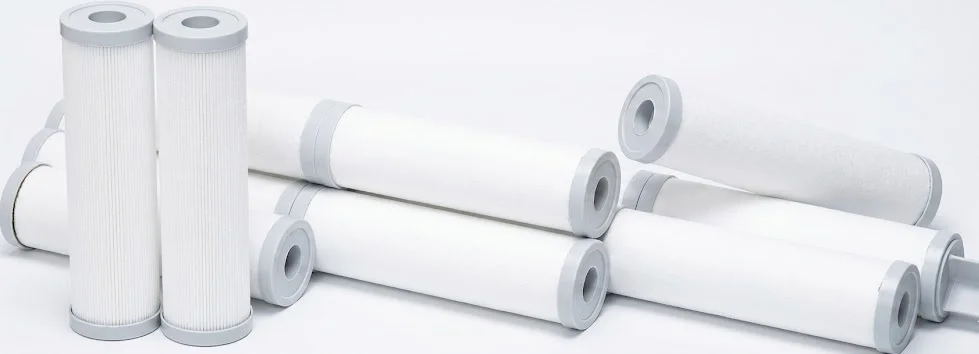
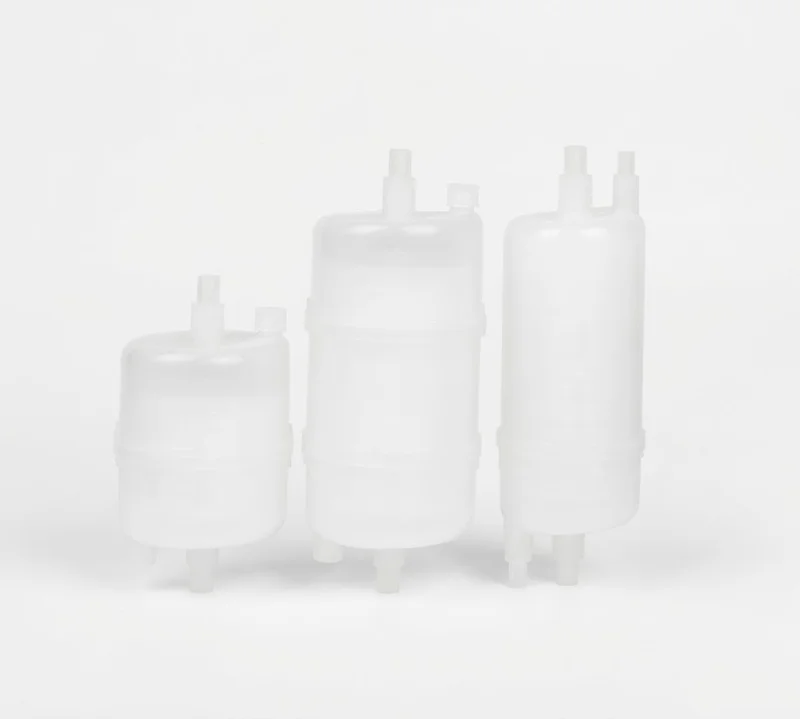
POU filter designed specifically for space-constrained advanced CMP processes. Made of all polypropylene (PP) material and disposable bladder structure, it has the advantages of small size, low cost and safe replacement. It can effectively remove agglomerated particles and colloids in Slurry while retaining effective abrasive particles, maintaining the particle size distribution (PSD) unchanged, and preventing wafer scratches.

  • POU filter designed for space-constrained advanced CMP tools
  • All-polypropylene (PP) disposable capsule construction
  • Compact, low cost and safe to replace
  • Effectively removes slurry agglomerates and colloids
  • Retains active abrasives, keeping PSD unchanged to prevent scratches
Micron rating
Melt-blown depth: 50 nm, 70 nm, 0.1, 0.2
Max operating temperature
80 °C
Effective filtration area
Depth builds are selected on dirt-holdin
Inlet / outlet connections
Inlet/outlet 3/8" flare or 1/4" NPT
Advanced CMP point-of-use (POU) filtration
Space-constrained CMP tools
Removal of slurry agglomerates and colloids
Wafer scratch prevention
Filter media / membrane
Melt-blown polypropylene micro/nanofibre depth media, or depth-pleated polypropylene; the pore structure is tuned to intercept the agglomerates and gels that scratch wafers while letting the working abrasive through, so the particle size distribution stays unchanged
Support & drainage layers
Polypropylene support and drainage layers; the low-loss flow path leaves the available ΔP at the point of use to the process rather than the filter
Body material
One-piece polypropylene shell, core and end caps, thermally welded throughout with no O-rings and no metal parts; the all-polypropylene build costs considerably less per unit than a fluoropolymer construction
Seals / O-rings
The body is thermally welded with no main O-ring, removing one slurry-contact interface and one place for particles to lodge; the slurry-optimised build uses EPDM port gaskets
Micron rating
Melt-blown depth: 50 nm, 70 nm, 0.1, 0.2, 0.3, 0.5, 0.7, 1.0 µm; pleated: 1.5, 3.0, 5.0, 10 µm
Effective filtration area
Depth builds are selected on dirt-holding capacity rather than membrane area; the pleated build packs more media into the same diameter for high-load duty or longer service life
Inlet / outlet connections
Inlet/outlet 3/8" flare or 1/4" NPT; the slurry-optimised build also offers a 3/8" flare and a tool-free quick connect
Hold-up volume
The compact body keeps hold-up low, which on CMP is a cost item and not just a spec: retained slurry is scrapped at every change-out, and a small volume is also less prone to settling and caking during idle periods. The slurry-optimised build lowers it further
Vent & drain
Vent/drain in 1/4" flare or 1/8" NPT; the slurry-optimised build omits the vent/drain altogether to cut dead volume and settling points
Max operating temperature
80 °C
Max forward differential pressure
Forward 0.5 MPa (73 psi) @ 25 °C; 0.19 MPa (27 psi) @ 82 °C; reverse 0.21 MPa (30 psi) @ 25 °C. Maximum operating pressure 0.5 MPa (75 psi) @ 25 °C
Recommended change-out ΔP
Single-use construction — it is not cleaned or regenerated. Set the change-out ΔP from your process SOP; common practice is 3–5× the clean initial ΔP or half the housing design pressure, whichever comes first
Sterilisation
Supplied non-sterile for CMP point-of-use duty; the polypropylene build is rated to 80 °C and takes a UPW flush, but steam treatment is not recommended
Wetting & flushing
Supplied dry or UPW pre-wet. At start-up, de-aerate on DI water at low flow and confirm a bubble-free outlet before introducing slurry — trapped air dries out patches of media and seeds caking
Extractables & cleanliness
Ultrapure-water flushed for low particle shedding, with an electronic grade also available
Integrity test
Both the depth and pleated media are nominally rated, so bubble-point testing does not apply; ΔP and particle removal efficiency are verified batch by batch
Packaging
Dry packed; UPW pre-wet packed
Regulatory & validation
Assembled, cleaned and packed in a cleanroom
Media typeCapsule diameterInner element diameterRating range
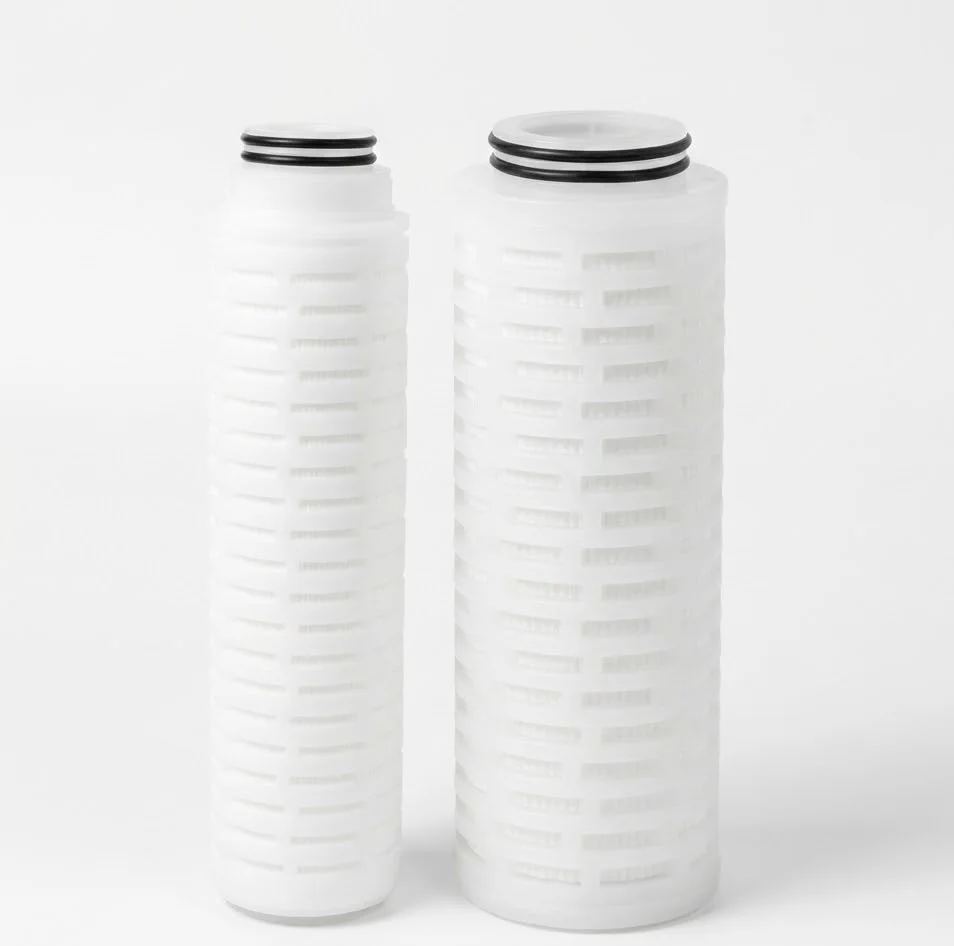
深層熔噴 DepthØ80 / Ø83.8 mmØ69 mm50 nm – 1.0 µm
摺疊 PleatedØ67.5 / Ø71.0 mmØ56 mm1.5 – 10 µm
Slurry 專用深層 DepthØ93.0 mmØ69 mm70 nm – 1.0 µm

The slurry-optimised build is tuned for colloidal silica, ceria and very fine alumina slurries and comes in 5" only (212.0 ± 2.0 mm overall; 202.0 ± 2.0 mm with the quick connect).

Note: actual compatibility and service life depend on chemical concentration, temperature, flow, differential pressure, upstream contamination load and housing design. Validate under your real process conditions.

Example part number
JY
-CM31K
-70
-P10
-05
-CPE
JY
JIUNYUAN Technology
CM31K
PP depth POU capsule, suffix K = kapsule
70
Ø70 mm
P10
0.1 µm
05
5"
CPE
Integrated capsule connection | EPDM O-ring
Selectable options by segment
01

Outer diameter

CodeSpecification
64Ø64 mm
70Ø70 mm
02

Retention rating

CodeSpecification
R5050 nm
R7070 nm
P100.1 µm
P200.2 µm
P300.3 µm
P500.5 µm
M0011 µm
M0033 µm
M0055 µm
M01010 µm
03

Length

CodeSpecification
022"
055"
1010"
04

End cap

CodeSpecification
CPIntegrated capsule connection
05

O-ring material

CodeSpecification
VTEV (modified EPDM)
EEPDM

Not every combination is a stock item; uncommon combinations are made to order. Confirm with JIUNYUAN sales before ordering.

Inline capsule
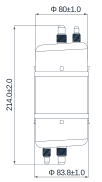
Inline capsuleDrawing shows one representative size; the table below gives the exact diameter and length of each code.
Media type / nominal lengthA (overall length)Ø (body / max)
深層 Depth 2.5"154.0 ± 2.0 mmØ80 ± 1.0 / Ø83.8 ± 1.0 mm
深層 Depth 5"214.0 ± 2.0 mmØ80 ± 1.0 / Ø83.8 ± 1.0 mm
摺疊 Pleated 2.5"139.0 ± 2.0 mmØ67.5 ± 1.0 / Ø71.0 ± 1.0 mm
摺疊 Pleated 5"210.0 ± 2.0 mmØ67.5 ± 1.0 / Ø71.0 ± 1.0 mm

A = overall length including the connections; the first Ø is the body diameter and the second the maximum over the end-cap flange. The capsule is welded as one piece with no seal-face spacing and no separable media section, so the B and C callouts on the drawing do not apply here.

0.2 µm0.3 µm0.5 µm0.7 µm1.0 µm00.501.001.502.002.503.00L/min00.200.400.60GPM030.060.090.0120kPa05.0010.015.0psi

UPW at 25 °C, 2.5" melt-blown depth capsule (154 mm overall), 3/8" connections, clean initial ΔP Right axis shows the same values in psi.

The 0.1 µm rating is left off the plot: at roughly 102 kPa per L/min it spends the entire ΔP budget by 1.2 L/min, so in practice it runs at low flow or with capsules in parallel. The 5" build shows about half the ΔP of the 2.5" at the same flow.

View data table
L/min / GPM0.2 µm0.3 µm0.5 µm0.7 µm1.0 µm
0.50 / 0.1318.115.29.896.804.16
1.00 / 0.2636.330.519.813.68.32
1.50 / 0.4054.445.729.720.412.5
2.00 / 0.5372.661.039.627.216.6
2.50 / 0.6690.776.249.534.020.8
3.00 / 0.7910991.459.440.825.0
ChemicalPPEPDM
— 酸 —
Glacial acetic acidRR
Hydrochloric acid, conc.RNR
Hydrochloric acid, 6NRNR
Nitric acid, conc.RNR
Nitric acid, 6NRNR
Phosphoric acid, conc.RR
Sulfuric acid, conc.RNR
Hydrofluoric acid, 6NNRNR
— 鹼 —
Ammonium hydroxide, 1NRR
Ammonium hydroxide, 3NRLR
Potassium hydroxide, 3NRR
Sodium hydroxide, 3NRR
Sodium hydroxide, 6NRR
— 醇類 —
Amyl alcoholRR
Benzyl alcoholRR
ButanolRR
Isopropyl alcohol (IPA)RR
MethanolRR
— 酮類 —
AcetoneRR
CyclohexanoneRNR
Methyl ethyl ketone (MEK)RR
Methyl isobutyl ketone (MIBK)RR
— 油類 —
Cottonseed oilRR
Lubricating oilRR
Peanut oilRR
Sesame oilRR
— 芳香烴 —
BenzeneNRNR
TolueneNRNR
XyleneNRNR
— 鹵代烴 —
Carbon tetrachlorideLRNR
ChloroformLRNR
Ethylene dichlorideLRNR
Freon TFLRNR
Freon TMCLRNR
DichloromethaneLRNR
PerchloroethyleneLRNR
TrichloroethyleneLRNR
— 二醇類 —
Ethylene glycolRR
GlycerolRR
Propylene glycolRR
— 醚類 —
Diethyl etherLRNR
Isopropyl etherRNR
DioxaneRNR
Tetrahydrofuran (THF)LRNR
— 酯類 —
Amyl acetateRR
Butyl acetateLRR
Cellosolve acetateRR
Ethyl acetateLRR
Methyl acetateRR
Isopropyl acetateRR
— 其他 —
AnilineLRR
Dimethylformamide (DMF)RR
Formaldehyde, 37%RR
GasolineLRR
Hexane (anhydrous)LRNR
KeroseneRNR
PhenolRNR
PyridineLRR
WaterRR
AcetonitrileLRR
  • R = resistant
  • LR = limited resistance, validate on site
  • NR = not resistant
  • — = no data

Ratings are general material-level guidance, not guarantees. Actual concentration, temperature, exposure time and mechanical stress all affect the outcome — validate with samples under your real process conditions before adoption.

Where it fits

Process position.Point-of-use filtration at the tool for advanced CMP processes. The one-piece capsule design eliminates the housing, so it is compact enough to fit constrained spaces inside the tool — the last line of defence for scratch control.

No housing required

Key characteristics

Key features.Element and shell are moulded as one unit, needing no separate vessel or piping and allowing flexible installation. On tools with no space reserved for filtration, this is often the only option that fits.

Safer change-out

The whole unit is replaced, so operators never contact the slurry and no vessel cleaning is required — eliminating batch-to-batch cross-contamination from residual slurry.

Particle size distribution preserved

Removes agglomerates and colloids while letting effective abrasive particles through, keeping the PSD intact so removal rate and uniformity are not disturbed.

Low particle shedding

All-PP construction, flushed with ultrapure water before shipment, keeps the element's own initial particle release low.

i
A POU filter should be finer than the upstream stage, but not so fine that it shifts the PSD. In practice start one or two grades below the upstream rating and monitor scratch count and removal rate together.
What are the advantages of a POU filter?
Its disposable capsule design is compact, low cost and safe to replace, making it ideal as a point-of-use filter on space-constrained advanced CMP tools.
Will it remove active abrasives?
No. It removes agglomerates and colloids from the slurry while retaining the active abrasive particles, keeping the particle size distribution (PSD) unchanged and preventing wafer scratches.
What material is it made of?
It is an all-polypropylene (PP) disposable capsule filter offering good chemical compatibility for CMP point-of-use filtration.