


Filter Retention Testing

Filter Retention Testing

Product ID: filter-testing-particle-retention-tests|Retention Validation

Professional filter filtration efficiency verification services. Challenge testing of gold nanoparticles (AuNPs), polystyrene microspheres (PSL) and silicon dioxide (SiO2) available from 5nm to 60nm. Through high-sensitivity detection technology, the filter retention efficiency (Retention Efficiency) and Log Reduction Value (LRV) are accurately calculated to assist semiconductor and filter material manufacturers in defining real filtration levels.

  • Gold nanoparticle (AuNP) challenge from 5 nm to 60 nm
  • Polystyrene latex (PSL) and silica (SiO2) standard particles
  • High-sensitivity detection quantifies up/downstream concentration
  • Retention efficiency and Log Reduction Value (LRV) calculation
  • Defines the true filter rating, not just the nominal label
  • Objective third-party data for semiconductor and media makers
Semiconductor wet-process filter rating validation
Filter-maker new product development and spec confirmation
Nano-scale retention efficiency and LRV benchmarking
AuNP / PSL / SiO2 challenge test outsourcing
UPW and chemical filter performance verification
Service scope
Retention validation in the nanometre range: filters are challenged with 5–60 nm gold nanoparticles (AuNP), polystyrene latex (PSL) and silica (SiO₂) standard particles to establish the true filtration grade rather than the nominal label. Serves semiconductor wet-process users verifying filter selection, and filter-media makers needing third-party performance data for new products.
Test method / standard
Standard particle challenge. Particles are introduced in the customer-specified chemistry and flow; three bottles are sampled both upstream and downstream, and retention efficiency and Log Reduction Value (LRV) are reported together with mean and standard deviation. Challenge concentration is agreed per process (an in-house reference case used 500 ppt gold ion into the system). Where no test standard is specified, the test matrix is designed around the real process conditions.
Instrumentation
Differential mobility analyser with condensation particle counter (DMA-CPC; detection limit ≥ 100 particles/mL, chemistry dependent; solvents UPW / IPA / OK73 and others). Gold nanoparticle runs are quantified upstream and downstream by inductively coupled plasma mass spectrometry (ICP-MS / ICP-QQQ, detection limit 1 ppt).
Sample requirement
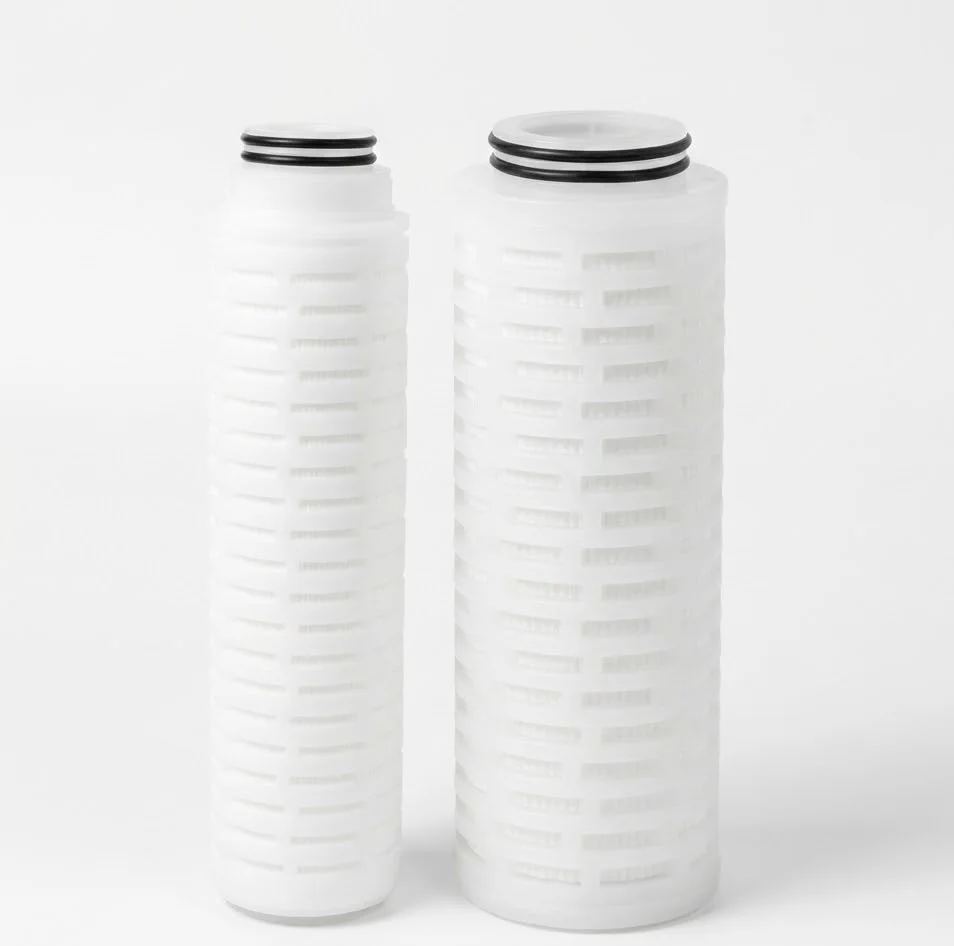
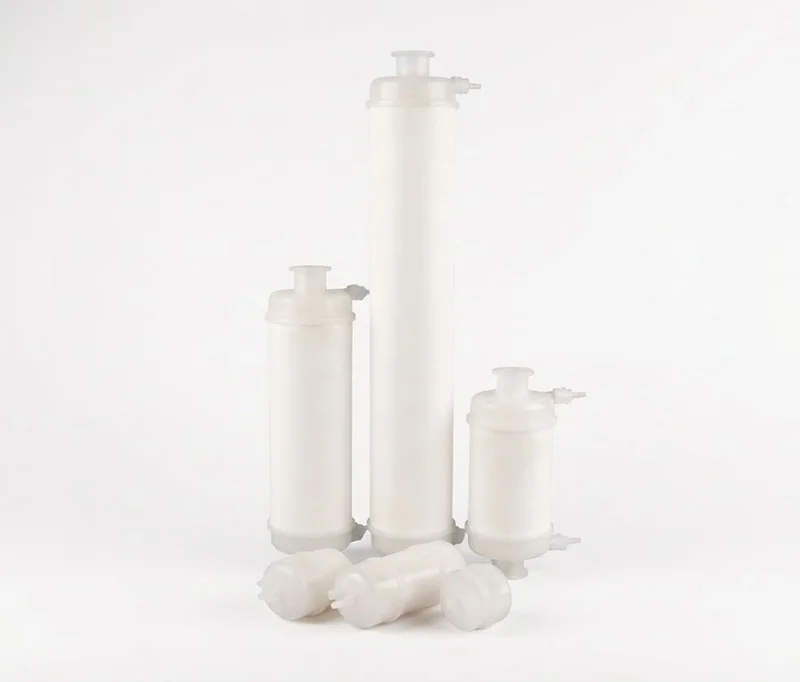
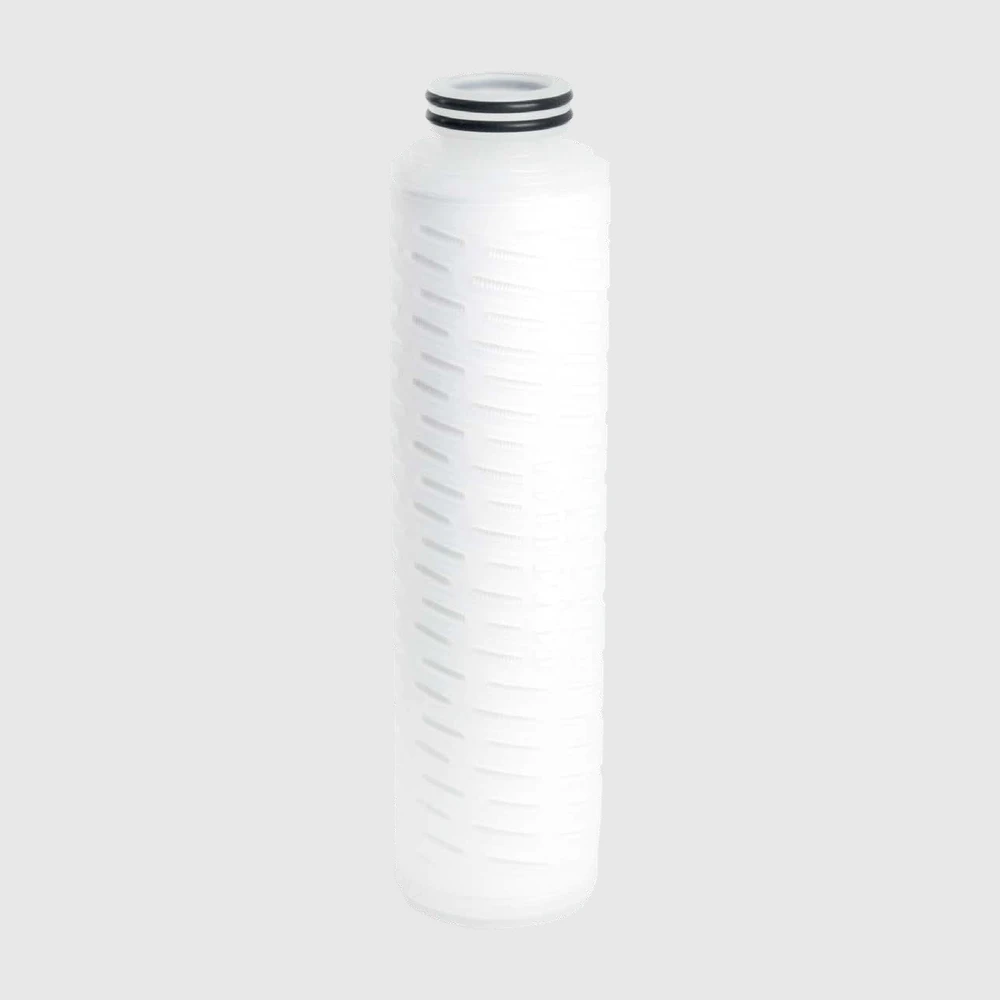
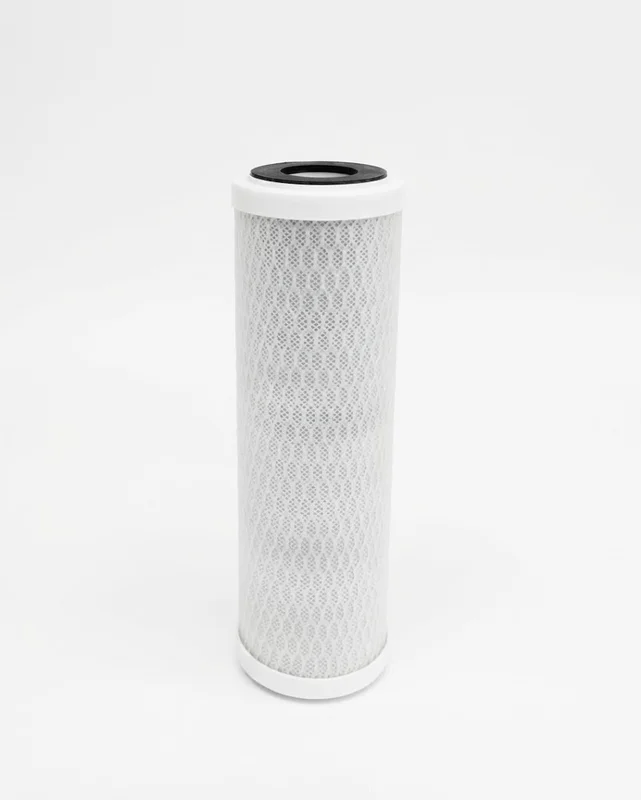
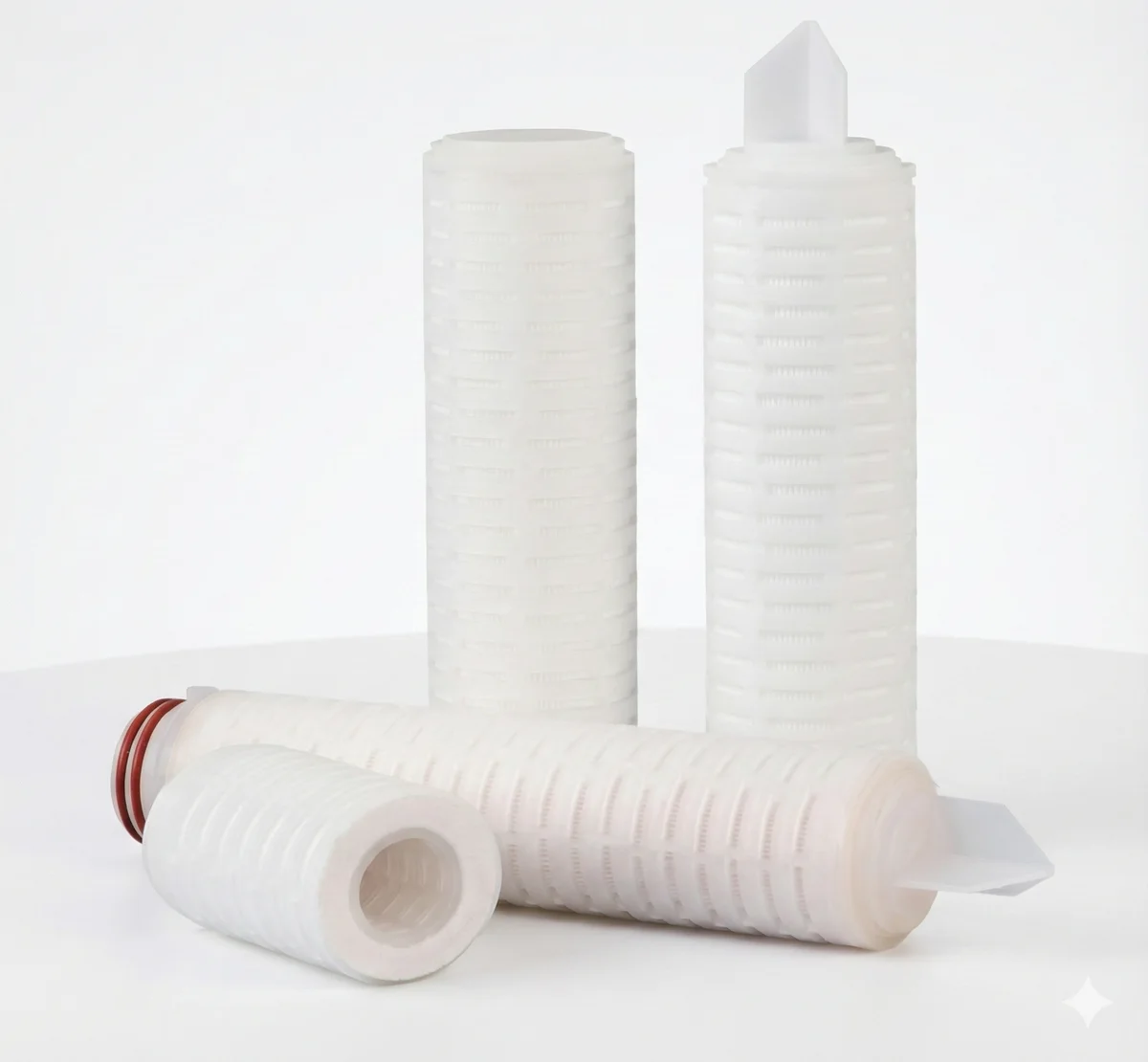
The filter itself, disposable or cartridge format. Please supply the nominal rating, the actual process chemistry and the target flow rate so that particle type, particle size and test conditions can be selected accordingly.
Deliverables
Upstream and downstream particle (or gold ion) concentrations, retention efficiency in percent and LRV, with the mean and standard deviation of the triplicate sampling, plus the full test conditions — particle specification, chemistry and flow.
Standard lead time
Confirmed with the quotation, based on scope and sample count. Standard flow: requirement received → samples received → joint review → quotation → project start → laboratory testing → report and walkthrough → customer feedback → additional checks → closure; samples are held for one month after closure before disposal.
Regulatory & validation
Testing is performed under customer-specified or mutually agreed process conditions; the report fully discloses particle type and size, chemistry, flow and sampling scheme so the data stays traceable.

Note: actual compatibility and service life depend on chemical concentration, temperature, flow, differential pressure, upstream contamination load and housing design. Validate under your real process conditions.

Where it fits

When to send this one in: the nominal rating on a filter does not match how it behaves in your process, a new supplier can only offer catalogue numbers, or a media maker needs objective third-party performance data for a new product. This service answers exactly one question — in the nanometre range, how much does this filter actually hold back.

Key characteristics

Three challenge particle families are available: gold nanoparticles (AuNP), polystyrene latex (PSL) and silica (SiO₂), in the 5 nm to 60 nm range. Particle size is chosen from the filter nominal rating and the target process rather than fixed in advance for every job.

Testing runs in the customer-specified chemistry and flow, not on pure water as a stand-in — the same filter behaves differently in UPW and in a process chemical. Three bottles are sampled upstream and three downstream, and the report gives mean and standard deviation together; single-point data at this scale is not trustworthy, and the triplicate sampling is deliberate.

Detection is by differential mobility analyser with condensation particle counter (DMA-CPC); for gold nanoparticle runs, upstream and downstream gold is quantified by inductively coupled plasma mass spectrometry (ICP-MS / ICP-QQQ, detection limit on the order of 1 ppt).

Choosing between options

These four are the ones customers most often conflate, and the boundaries are actually clear:

ServiceQuestion it answersWhat you send
Nanoparticle retention testing (this)How much does it retain in the nanometre range?The filter itself
Cartridge performance testingHow does it do on retention, integrity, flow and capacity together?New or used cartridges of one model
Filter cleanliness testingHow much does the filter itself release?New and used filters, ideally as a pair
Extractables and leachables testingWhat does this material release into my chemistry?Filters, tubing, packaging and other wetted parts

Operation & change-out

What to send: the filter itself, disposable or cartridge format. Please state the nominal rating, the actual process chemistry and the target flow rate — those three determine particle type, particle size and test conditions, and without them the test can only run on assumed conditions. Turnaround is confirmed with the quotation from the scope and sample count; samples are held for one month after closure before disposal.

i
The report discloses particle type and size, chemistry, flow and the sampling scheme in full. Data is only traceable and reproducible when the conditions are on the page — a report that says "99.9% retention" with no conditions attached is worth nothing in a cross-supplier comparison.
Which challenge particles can you test?
We provide three standard particle types: gold nanoparticles (AuNP) from 5 nm to 60 nm, polystyrene latex (PSL) microspheres and silica (SiO2). Particle size is chosen to match your filter's rated pore size and target process so the challenge reflects real retention demands.
What data does the report include?
Using high-sensitivity detection, we measure particle concentration upstream and downstream of the filter and calculate Retention Efficiency and Log Reduction Value (LRV). This lets you objectively judge the filter's true filtration grade for spec definition and selection.
Who is this testing service for?
It mainly serves semiconductor wet-process users and filter media manufacturers. Fabs can verify whether a filter meets process requirements, while media makers use it for new product development and specification confirmation with objective third-party performance data.