
Home/Products/Pleated Cartridge Filters/Semiconductor-grade PTFE Membrane Filter Cartridge
Semiconductor-grade PTFE Membrane Filter Cartridge

Semiconductor-grade PTFE Membrane Filter Cartridge

Product ID: hydrophobic-ptfe-nano-filter|PTFE Membrane

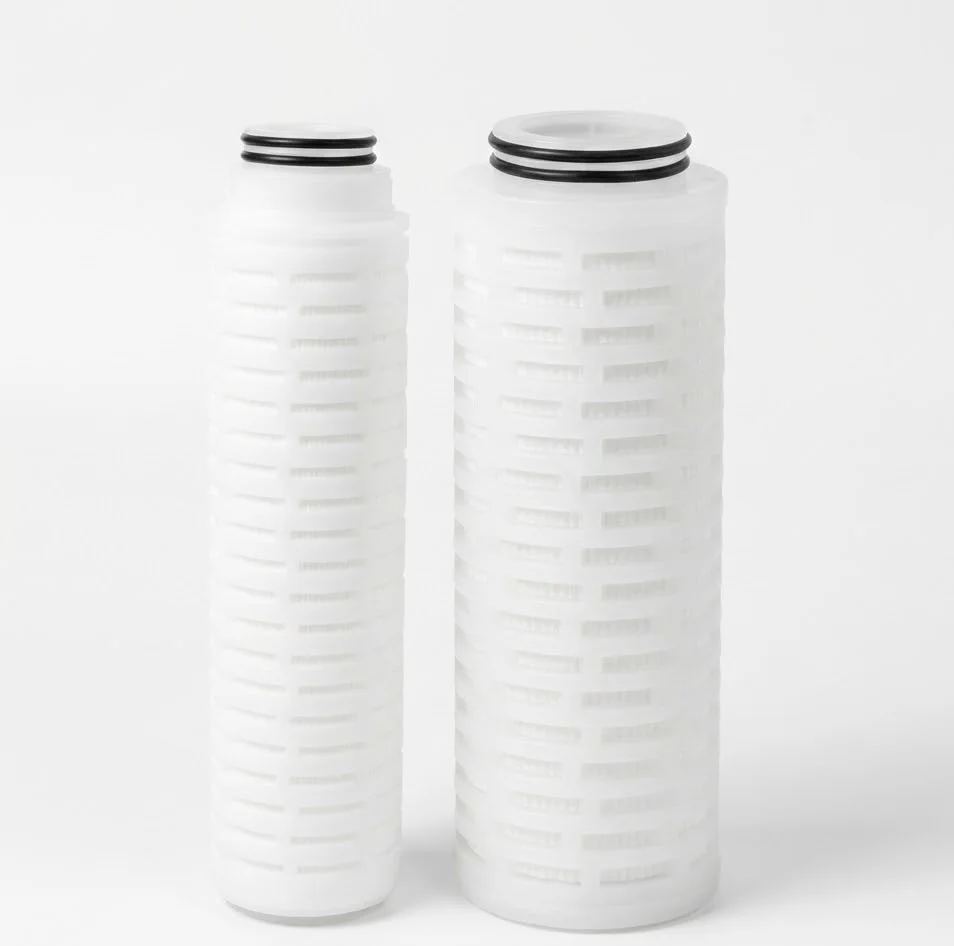
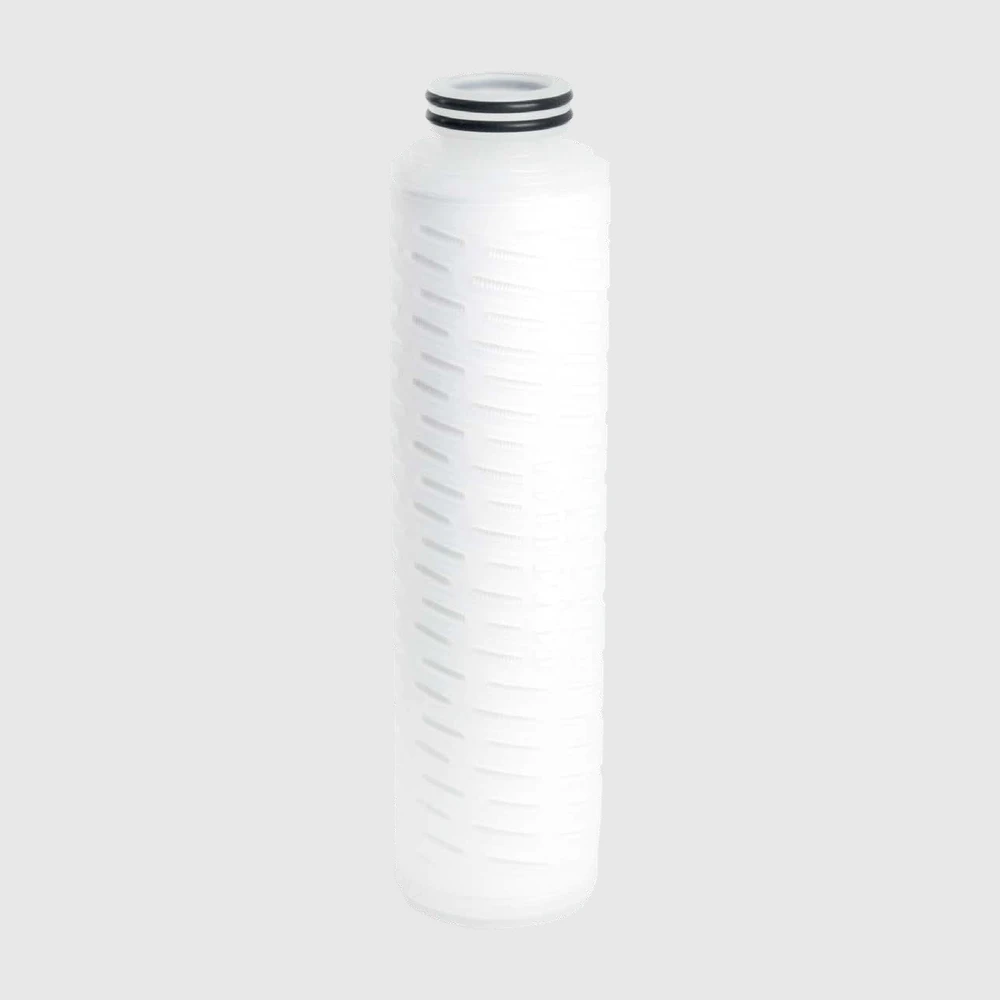
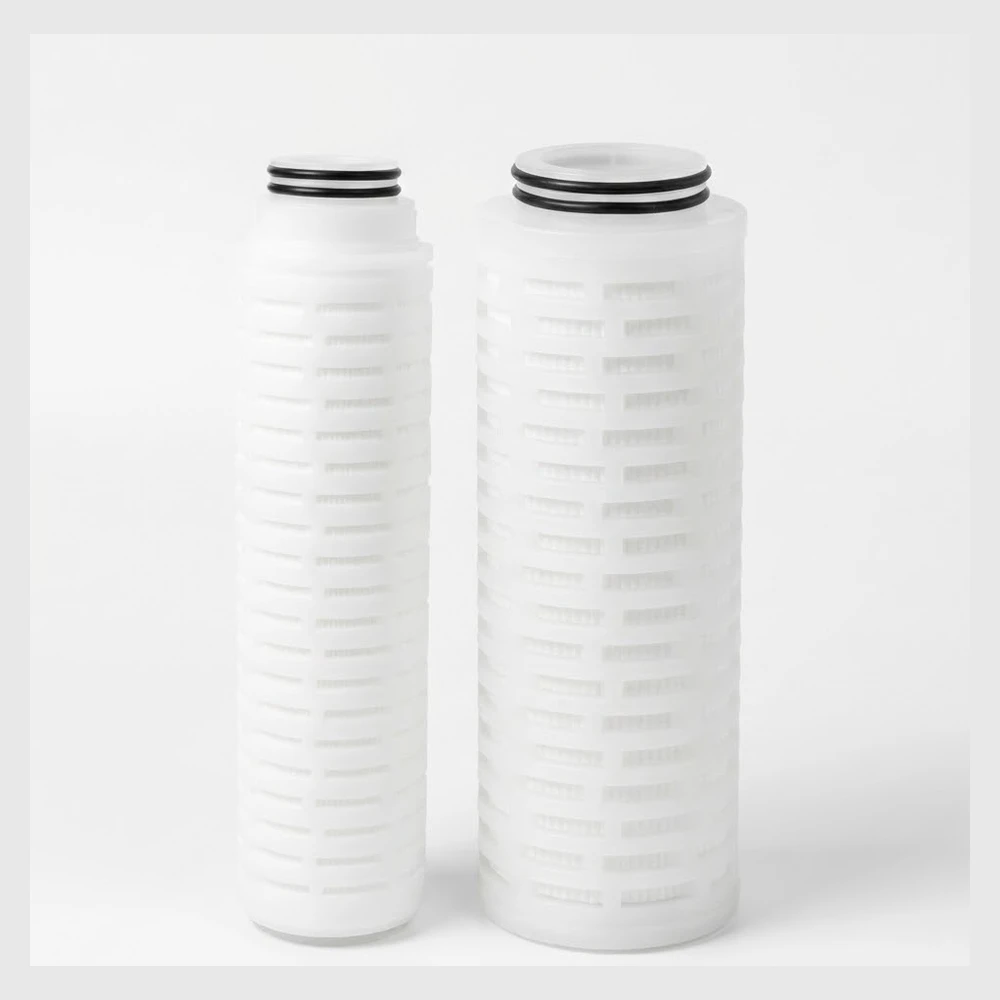
A PTFE membrane filter cartridge designed for corrosive semiconductor wet processes and high-purity chemical filtration. A proprietary fluoropolymer membrane micro-structure control platform builds a highly connected, uniform and stable nano-pore network, helping customers achieve higher retention, lower extractables and faster clean-up to production ready across SPM, SC1, SC2, TMAH, 29% NH4OH, 35% HCl, 70% HNO3, phosphoric acid, PAN, mixed-acid etchants and NBA. 10/20/30/50nm and 0.1µm ratings, 222 Flat Cartridge, samples ready.

  • Proprietary fluoropolymer membrane micro-structure platform with a highly connected, uniform nano-pore network
  • PTFE media withstands strong acids, strong bases and highly corrosive process chemicals
  • Rare ultra-thin PTFE membrane micro-structure (<35µm) for faster clean-up to production ready
  • Measured GNP 10nm retention 95% (ultrapure water) for nano-scale contaminant control
  • Ultra-low extractables: NVR <20 mg/device, metals <5 µg/device
  • 10/20/30/50nm & 0.1µm ratings, 222 Flat Cartridge, samples ready
Micron rating
10 nm / 20 nm / 30 nm / 50 nm / 0.1 µm
Max operating temperature
70 °C
Effective filtration area
Ø68 mm: 1.2 m²/10"
Nominal lengths
4" / 10" / 20"
SPM / 70% HNO3 / mixed-acid etchant oxidizing processes
SC1 / SC2 / TMAH / 29% NH4OH cleaning & alkaline
35% HCl / PAN acidic processes
Phosphoric-acid high-temperature filtration
NBA and other high-chemical-resistance chemicals
Chemical supply, point-of-use and reclaim pre-filtration
Filter media / membrane
Naturally hydrophobic PTFE microporous membrane with a uniform pore distribution that neither swells nor sheds in organic solvents and aggressive chemistries
Support & drainage layers
Polypropylene support & drainage layers
Cage, core & end caps
Polypropylene cage, core and end caps
Seals / O-rings
EPDM or TEV (modified EPDM) O-rings, 222 style
Micron rating
10 nm / 20 nm / 30 nm / 50 nm / 0.1 µm
Effective filtration area
Ø68 mm: 1.2 m²/10"; Ø83 mm: 1.8 / 2.2 / 2.8 m²/10"
Nominal outer diameter
Ø68 mm / Ø83 mm
Nominal lengths
4" / 10" / 20"
End cap / connection
222 flat, single open end
Max operating temperature
70 °C
Max forward differential pressure
0.4 MPa (58 psi) @ 25 °C; 0.2 MPa (29 psi) @ 70 °C
Max reverse differential pressure
0.3 MPa (43 psi) @ 25 °C
Wetting & flushing
A hydrophobic membrane will not wet spontaneously with water: for aqueous service choose the UPW pre-wet option or wet out per SOP, otherwise measured ΔP will sit far above the curve
Extractables & cleanliness
Metal cleanliness available at < 25 µg/device with an electronic grade also offered; extractables are low
Integrity test
100% integrity tested before shipment
Packaging
Dry packed; UPW pre-wet packed
CodeOuter diameterMembrane area (10")
SXØ68 mm1.2 m²
MXØ83 mm1.8 m²
MYØ83 mm2.2 m²
MZØ83 mm2.8 m²

Note: actual compatibility and service life depend on chemical concentration, temperature, flow, differential pressure, upstream contamination load and housing design. Validate under your real process conditions.

Example part number
JY
-WE26
-68
-R20
-10
-E5D
JY
JIUNYUAN Technology
WE26
Naturally hydrophobic PTFE membrane with PP hardware — no swelling or shedding in solvents and aggressive chemistries
68
Ø68 mm
R20
20 nm
10
10"
E5D
EPDM O-ring | grade 5 (< 25 µg/device) | dry
Selectable options by segment
01

Outer diameter

CodeSpecification
68Ø68 mm
83Ø83 mm
02

Retention rating

CodeSpecification
R1010 nm
R2020 nm
R3030 nm
R5050 nm
P100.1 µm
03

Length

CodeSpecification
044"
1010"
2020"
04

O-ring material

CodeSpecification
EEPDM
VTEV (modified EPDM)
05

Cleanliness grade

CodeSpecification
5< 25 µg/device

The catalogue lists a single grade, < 25 µg/device (code 5); ask sales for the electronic-grade code.

06

Packaging

CodeSpecification
DDry packed
WUPW pre-wet packed

A hydrophobic membrane does not wet out in water: choose W (UPW pre-wet) for aqueous service, otherwise measured ΔP will sit far above the flow curve.

Not every combination is a stock item; uncommon combinations are made to order. Confirm with JIUNYUAN sales before ordering.

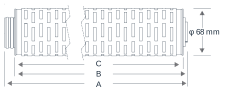
Single open end, 222 flat
Single open end, 222 flatDrawing shows one representative size; the table below gives the exact diameter and length of each code.
Diameter / nominal lengthABC
Ø68 mm 4"131.5 ± 2 mm117.0 ± 2 mm115.0 ± 2 mm
Ø68 mm 10"249.5 ± 2 mm235.0 ± 2 mm233.0 ± 2 mm
Ø68 mm 20"488.5 ± 2 mm474.0 ± 2 mm472.0 ± 2 mm
Ø83 mm 4"118.0 ± 2 mm103.0 ± 2 mm101.0 ± 2 mm
Ø83 mm 10"238.0 ± 2 mm223.0 ± 2 mm221.0 ± 2 mm
Ø83 mm 20"460.0 ± 2 mm445.0 ± 2 mm443.0 ± 2 mm

A = overall length; B = seal face to seal face; C = effective media length.

20 nm30 nm50 nm0.1 µm02.004.006.008.0010.0GPM010.020.030.0LPM010.020.030.040.0kPa02.004.00psi

UPW at 25 °C, single Ø83 mm 10" cartridge (2.8 m²), clean initial ΔP, membrane fully wetted out Right axis shows the same values in psi.

For multiple cartridges, per-cartridge flow = total flow ÷ count. A 20" cartridge shows roughly half the ΔP of a 10".

View data table
GPM / LPM20 nm30 nm50 nm0.1 µm
2.00 / 7.578.117.164.482.41
4.00 / 15.116.214.38.964.82
6.00 / 22.724.321.513.47.23
8.00 / 30.332.428.617.99.64
10.0 / 37.940.635.822.412.1
ChemicalPTFEEPDMFKM / Viton
— 酸 —
Glacial acetic acidRRNR
Hydrochloric acid, conc.RNRNR
Hydrochloric acid, 6NRNRR
Nitric acid, conc.RNRR
Nitric acid, 6NRNRR
Phosphoric acid, conc.RRR
Sulfuric acid, conc.RNRR
Hydrofluoric acid, 6NRNR
— 鹼 —
Ammonium hydroxide, 1NRRR
Ammonium hydroxide, 3NRLRLR
Potassium hydroxide, 3NRRR
Sodium hydroxide, 3NRRR
Sodium hydroxide, 6NRRR
— 醇類 —
Amyl alcoholRRR
Benzyl alcoholRRR
ButanolRRLR
Isopropyl alcohol (IPA)RRR
MethanolRRNR
— 酮類 —
AcetoneRRNR
CyclohexanoneRNRNR
Methyl ethyl ketone (MEK)RRNR
Methyl isobutyl ketone (MIBK)RRNR
— 油類 —
Cottonseed oilRRR
Lubricating oilRRR
Peanut oilRRR
Sesame oilRRR
— 芳香烴 —
BenzeneRNRR
TolueneRNRR
XyleneRNRR
— 鹵代烴 —
Carbon tetrachlorideRNRR
ChloroformRNRR
Ethylene dichlorideRNRLR
Freon TFRNRR
Freon TMCRNRLR
DichloromethaneRNRLR
PerchloroethyleneRNRR
TrichloroethyleneRNRR
— 二醇類 —
Ethylene glycolRRR
GlycerolRRR
Propylene glycolRRR
— 醚類 —
Diethyl etherRNRNR
Isopropyl etherRNRNR
DioxaneRNRNR
Tetrahydrofuran (THF)RNRNR
— 酯類 —
Amyl acetateRRNR
Butyl acetateRRR
Cellosolve acetateRRNR
Ethyl acetateRRR
Methyl acetateRRR
Isopropyl acetateRRNR
— 其他 —
AnilineRRR
Dimethylformamide (DMF)RRNR
Formaldehyde, 37%RRNR
GasolineLRRR
Hexane (anhydrous)LRNRR
KeroseneRNRR
PhenolRNRR
PyridineRRNR
WaterRRR
AcetonitrileRRNR
  • R = resistant
  • LR = limited resistance, validate on site
  • NR = not resistant
  • — = no data

Ratings are general material-level guidance, not guarantees. Actual concentration, temperature, exposure time and mechanical stress all affect the outcome — validate with samples under your real process conditions before adoption.

Where it fits

Why does a semiconductor process need a PTFE membrane filter?In highly corrosive processes such as SPM, SC1, SC2, TMAH, HCl, HNO3, phosphoric acid, PAN and mixed-acid etchants, the cartridge must not only withstand the chemical itself but also balance nano-scale contaminant retention, low metal extractables, low organic extractables, ΔP and rinse time.

The semiconductor-grade PTFE membrane filter uses a highly uniform membrane micro-pore network to deliver stable nano-scale retention and more predictable flow-channel behavior, making it well suited to wet-process chemical filtration that demands high purity, high chemical resistance and fast production-ready adoption.

Key characteristics

Core product features.Unlike conventional fiber depth media, this product is built around advanced fluoropolymer membrane micro-structure engineering, creating a more uniform, more connected and more controllable nano-pore network.
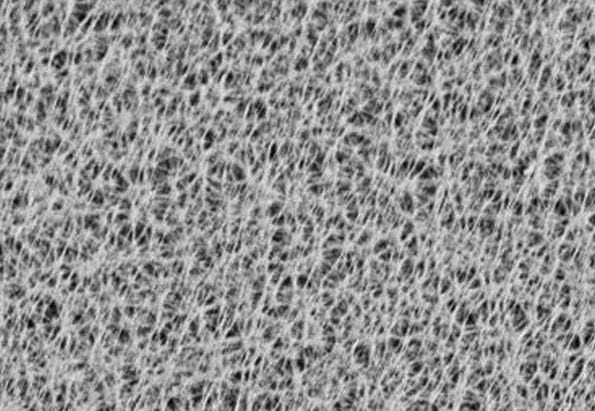
Semiconductor-grade PTFE membrane filter SEM micro-structure image
SEM image of the PTFE membrane micro-structure — a highly connected nano-pore network

Industry-unique membrane-type PTFE filter

Combining PTFE media with a membrane-type micro-pore structure delivers both compatibility with strong acids, strong bases and highly corrosive process chemicals, and the stable high-precision retention of membrane media.

Rare ultra-thin PTFE membrane micro-structure

A thinner, more precise PTFE membrane micro-structure (<35µm) helps reduce rinse burden and early release risk, so the cartridge cleans up to production ready faster and shortens qualification, line-change and ramp-up wait time.

Very high porosity and pore uniformity

The high-porosity design provides more effective flow channels that balance nano-scale retention with usable flow and ease the high-ΔP pain point of high-precision filters; a uniform, continuous micro-pore network lowers local velocity variation, bypass and premature clogging risk for more stable, predictable performance.

Measured data: gold nanoparticle GNP 10nm retention = 95% (ultrapure water); ultra-low NVR <20 mg/device, ultra-low metals <5 µg/device.

Choosing between options

Proprietary fluoropolymer membrane micro-structure control platform

How it differs from a standard PTFE pleated filter.

AspectStandard PTFE pleated filterSemiconductor-grade PTFE membrane filter
PositioningGeneral gas, liquid or highly corrosive useSemiconductor corrosive wet process and high-purity chemical filtration
Technical narrativeEmphasizes PTFE chemical compatibility and hydrophobicityEmphasizes fluoropolymer membrane micro-structure, nano-pore uniformity and low extractables
RatingCommonly 0.1µm and above, gas sterilization10nm, 20nm, 30nm, 50nm, 0.1µm and other options
Adoption metricsPurchase by spec and compatibilityRetention, ΔP, NVR, metals and production-ready time together
ApplicationsGeneral industry, gas, biotech or corrosive liquidsSPM, SC1, SC2, TMAH, HCl, HNO3, PAN, mixed-acid etchants
How does this differ from a standard PTFE pleated filter?
Standard PTFE pleated filters tend to emphasize chemical resistance, hydrophobicity or gas filtration. This semiconductor-grade PTFE membrane filter focuses on 10/20/30/50nm and 0.1µm ratings, with membrane micro-pore structure, pore uniformity, low NVR, low metal extractables and fast production-ready clean-up.
Can it be used with SPM, SC1, SC2 or TMAH?
It can be evaluated for various acid/base and semiconductor wet processes including SPM, SC1, SC2, TMAH, 29% NH4OH, 35% HCl, 70% HNO3, phosphoric acid, PAN and mixed-acid etchants. Sample validation under your actual concentration, temperature, flow and ΔP is still recommended.
Are 10nm or 20nm samples available?
Samples are ready. Ask about 10nm, 20nm, 30nm, 50nm, 0.1µm and other ratings; we can arrange sample testing and specification confirmation to suit your process.
What does Bubble Point >400 kPa mean?
Bubble Point is one reference indicator of membrane integrity and pore-size correlation. The actual verification method should follow the cartridge spec, wetting liquid, test method and your internal standard.
What should I choose if I need low ΔP or high flow?
The 68mm type references 0.5 kg/cm² @ 1 LPM. For a low-ΔP (high-flow) option, share your target flow, ΔP limit, cartridge length and housing spec and we will recommend a suitable option.
Can the O-ring be FFKM or EPDM?
FFKM, EPDM, TEV and other O-ring options are available. Choose the material based on your chemical, temperature and process compatibility.
How do I start testing?
Email service@jyfiltec.com with your chemical, operating temperature, flow, differential pressure, current cartridge spec and target contaminant. We will help confirm samples, specification and an initial test direction.