
Where it fits
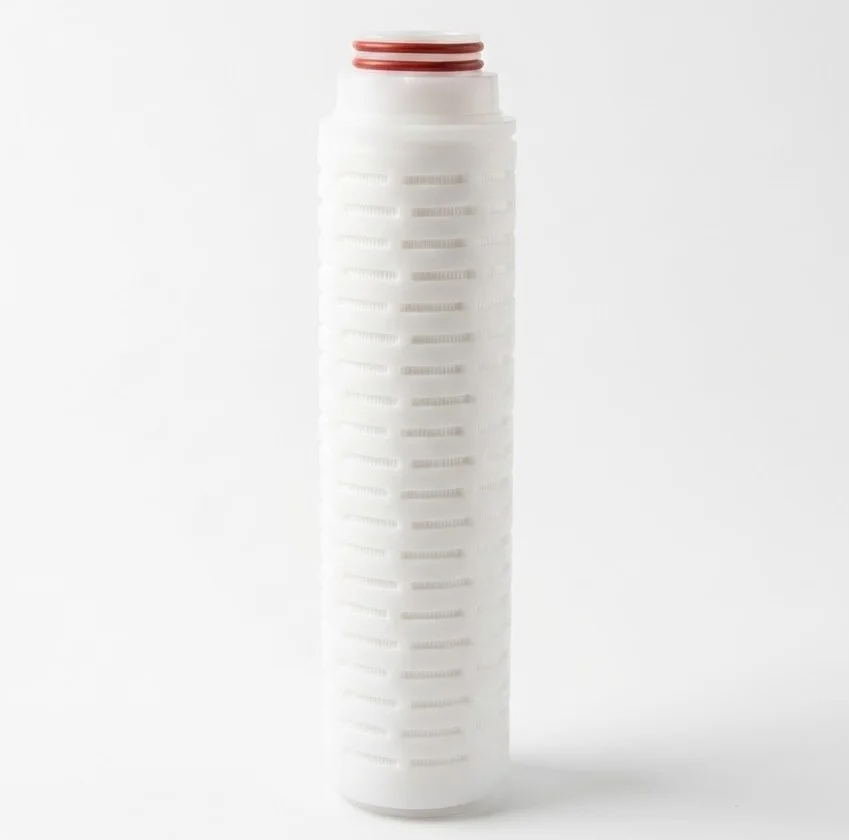
This is the flagship element on the lithography chemical side, aimed specifically at soft gels in photoresist. Gels deform: a hard particle stopped by a pore is stopped for good, but a gel can extrude through under differential pressure. Capturing them depends not only on pore size but on the membrane staying chemically stable in the chemistry — no swelling, no shedding.
Key characteristics
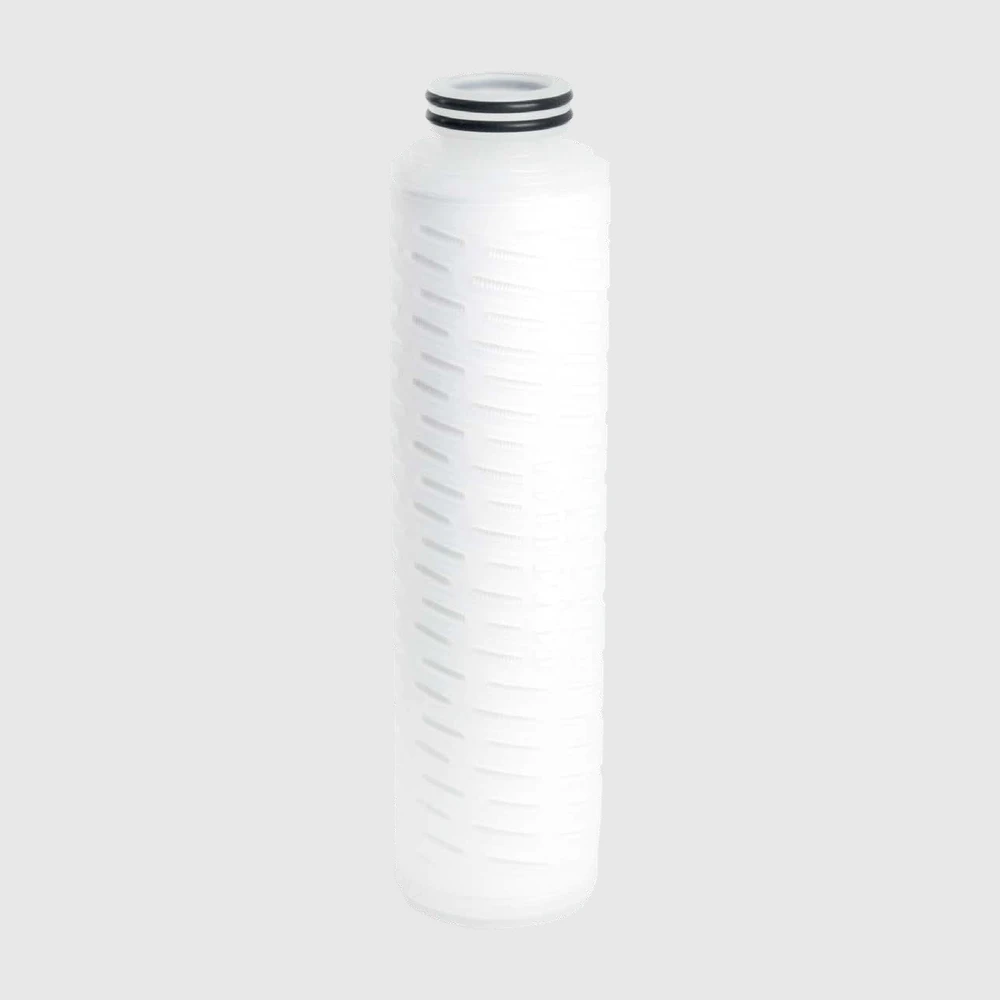
UPE (ultra-high molecular weight polyethylene) has good intrinsic cleanliness and low particle shedding, which matters most at ratings like 2 nm: debris shed by the filter itself is the same size as what it is meant to capture. Metal and organic extractables are both low, with metal cleanliness selectable at < 3 or < 25 µg/device.
Ratings run from 2 nm all the way to 0.2 µm, so one family covers the most demanding advanced-node duty through to general filtration without changing housing or end cap interface.
Choosing between options
Against the other lithography workhorse, the Nylon 66 cartridge:
| Item | UPE (this) | Nylon 66 |
|---|---|---|
| Membrane | UPE, hydrophobic | Nylon 66, naturally hydrophilic |
| Rating | 2 nm – 0.2 µm | 2 nm – 0.1 µm |
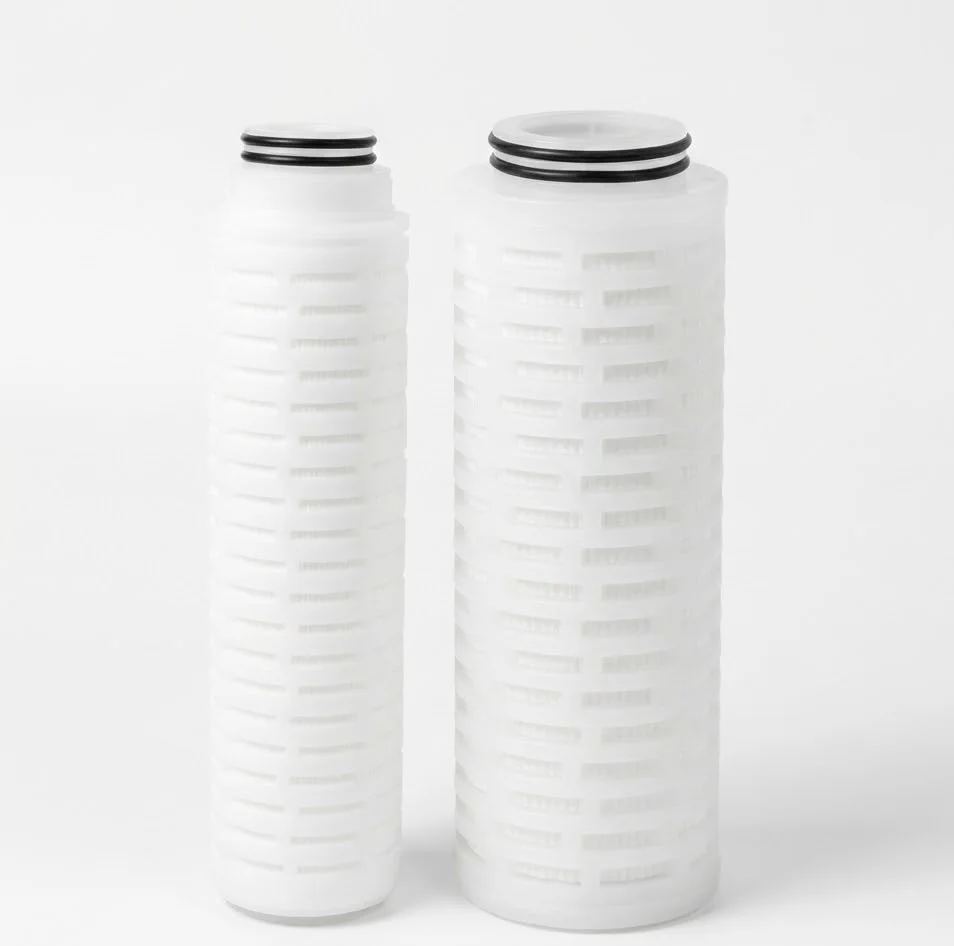
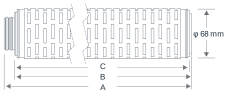
| Diameter / area | Ø68 1.2 m2 / Ø83 1.8 m2 per 10" | Ø68 mm, 0.7 or 1.3 m2 per 10" |
| Choose it when | Gel capture in resist, more area and wider rating range | Aqueous or polar chemistry, alcohol-free start-up |
Operation & change-out
The membrane is hydrophobic and ships dry or ultrapure-water pre-wet. For photoresist and solvent duty, displace the wetting fluid stepwise with the process solvent — an interface left between wetting fluid and process fluid at the membrane face shows up directly as a coating defect. Maximum forward ΔP is 0.34 MPa and reverse 0.24 MPa, ceiling 40 °C.